Methylphenidate vs Atomoxetine: What’s the Difference?
Choosing an ADHD medication can feel confusing, particularly when you hear about medicines such as Methylphenidate (ritalin) and atomoxetine (strattera).
Although both can be used to manage ADHD symptoms, they are very different types of medicine. Methylphenidate is a stimulant, while atomoxetine is a non-stimulant medicine. They work differently in the brain and can also differ in how quickly their effects become noticeable.
Methylphenidate is available in several formulations and brands including Ritalin, Concerta, Medikinet and others. It is prescription-only and is also classified as a controlled drug.
Atomoxetine, meanwhile, is a non-stimulant ADHD medicine that works primarily by increasing noradrenaline activity. UK product information describes it as not a psychostimulant and not an amphetamine derivative.
So, which is better: methylphenidate or atomoxetine?
There isn’t one answer that applies to everyone. The appropriate choice depends on factors such as age, symptoms, response to previous treatment, side effects, other medicines and individual circumstances.
What Is Methylphenidate?
Methylphenidate is a stimulant medicine used to treat ADHD.
It increases activity involving neurotransmitters such as dopamine and noradrenaline in parts of the brain involved in attention and behaviour.
It is available in immediate-release and modified-release preparations. Depending on the formulation, it may be taken more than once a day or as a longer-acting preparation.
One important point is that different methylphenidate products can release the medicine differently. NHS guidance therefore recommends sticking to the same brand unless your prescriber advises otherwise.
What is methylphenidate used for?
Methylphenidate is primarily used to manage ADHD symptoms such as:
- Difficulty concentrating
- Distractibility
- Impulsivity
- Hyperactivity
- Difficulty organising tasks
- Problems maintaining attention
It can be prescribed for children, teenagers and adults when clinically appropriate.
What Is Atomoxetine?
Atomoxetine is a non-stimulant medicine used to treat ADHD.
Unlike methylphenidate, atomoxetine does not belong to the stimulant class and is not an amphetamine derivative. It primarily affects the brain’s noradrenaline system.
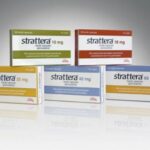
Atomoxetine is also known by the brand name Strattera.
If you’re researching this medication, our detailed guide can help:
Strattera (Atomoxetine): Uses, Side Effects, How It Works and What to Know
Methylphenidate vs Atomoxetine: How Do They Work?
The biggest difference between these two medicines is their mechanism of action.
| Feature | Methylphenidate | Atomoxetine |
|---|---|---|
| Type | Stimulant | Non-stimulant |
| Main neurotransmitter effects | Dopamine and noradrenaline | Mainly noradrenaline |
| ADHD treatment | Yes | Yes |
| Controlled drug in the UK | Yes | No |
| Amphetamine derivative | No | No |
| Usually works quickly? | Yes, once the appropriate dose is established | Generally takes longer |
| Available as different formulations | Yes | Yes |
| Prescription medicine | Yes | Yes |
Methylphenidate is classified as a stimulant and controlled drug in the UK. Atomoxetine is not a psychostimulant.
Which Works Faster: Methylphenidate or Atomoxetine?
This is one of the most common questions about methylphenidate vs atomoxetine.
Generally, methylphenidate works faster.
The NHS states that once the appropriate dose has been established, methylphenidate can begin working within around 30 to 60 minutes, depending on the formulation. However, finding the right dose and formulation can take several weeks.
Atomoxetine generally takes longer to produce its full therapeutic effect. NICE notes that stimulant medicines such as methylphenidate tend to work more quickly than non-stimulants such as atomoxetine.
This means someone starting atomoxetine should not necessarily expect the same immediate change that can occur with a stimulant.
Methylphenidate vs Atomoxetine for Adults
Both medicines can be relevant when treating ADHD in adults, although treatment choices depend on individual circumstances.
NICE recommends methylphenidate or lisdexamfetamine as stimulant options for adults with ADHD. Atomoxetine is recommended for adults who cannot tolerate these stimulant options or whose symptoms have not responded adequately after appropriate trials.
Atomoxetine has also been studied extensively in adults with ADHD, with clinical trials demonstrating improvement in ADHD symptoms compared with placebo.
Why might an adult be prescribed atomoxetine?
A healthcare professional may consider atomoxetine when:
- A stimulant is not tolerated
- A person does not respond adequately to stimulant treatment
- A non-stimulant approach is considered more appropriate
- Previous ADHD medicines have caused problematic adverse effects
The decision should be made by a qualified healthcare professional rather than based solely on which medicine appears stronger or faster.
Methylphenidate vs Atomoxetine Side Effects
Both medicines can cause side effects, but the effects are not identical.
Common methylphenidate side effects
Methylphenidate can cause:
- Headaches
- Sleep problems
- Reduced appetite
- Nausea
- Dry mouth
- Increased heart rate or blood pressure
- Feeling nervous or restless
The NHS specifically lists headaches and sleep problems among possible side effects.
Common atomoxetine side effects
Atomoxetine may cause:
- Nausea
- Reduced appetite
- Headache
- Dizziness
- Tiredness
- Sleep changes
- Increased heart rate or blood pressure
Individual responses vary, so experiencing a side effect with one medication does not necessarily mean another ADHD medicine will cause the same problem.
Does Atomoxetine Have Fewer Side Effects Than Methylphenidate?
Not necessarily.
Atomoxetine and methylphenidate have different mechanisms, so their side-effect profiles are different. One person may tolerate methylphenidate well while another may experience troublesome effects. The same applies to atomoxetine.
A medication should therefore not be considered automatically “better” simply because it is a stimulant or non-stimulant.
Your prescriber can monitor factors such as:
- Blood pressure
- Heart rate
- Weight and appetite
- Sleep
- Mood
- ADHD symptom control
- Overall functioning
Methylphenidate or Atomoxetine: Which Is More Effective?
Both medicines can be effective for ADHD, but research does not mean that one will work best for every individual.
NICE’s evidence review found clinically important benefits for stimulant treatment including methylphenidate and noted that stimulants generally work more quickly than non-stimulants such as atomoxetine.
UK product information also includes studies directly comparing atomoxetine with modified-release methylphenidate. In one paediatric study, the response rate was higher with methylphenidate than atomoxetine, although such study results cannot predict how an individual person will respond.
The goal of treatment is therefore not simply to find the medicine that appears strongest in research. It is to find an effective treatment that provides meaningful symptom improvement while remaining tolerable and appropriate for the individual.
Is Atomoxetine Better Than Ritalin?
Ritalin is one brand of methylphenidate.
Therefore, the question “atomoxetine vs Ritalin” is essentially another way of asking about a non-stimulant versus a stimulant ADHD medicine.
Ritalin/methylphenidate may begin working relatively quickly once the appropriate dose has been established, while atomoxetine generally takes longer. Atomoxetine may nevertheless be considered when stimulant medicines are unsuitable or have not provided enough benefit.
Strattera vs Methylphenidate
Strattera is a brand name for atomoxetine, so Strattera vs methylphenidate is another comparison between atomoxetine and a stimulant ADHD medicine.
Strattera/atomoxetine is a non-stimulant, whereas methylphenidate is a stimulant.
This difference can be particularly useful when discussing ADHD treatment options because not everyone responds to stimulant medicines in the same way.
If you’re comparing different ADHD treatment options, you may also find our guide to ADHD medication types and their differences useful before discussing treatment choices with a healthcare professional.
Can You Take Methylphenidate and Atomoxetine Together?
Do not combine ADHD medicines unless your prescriber specifically recommends and supervises the combination.
There can be circumstances in which specialists consider different medication strategies, but this should not be attempted independently.
If you are already taking one ADHD medicine and believe it is not working well enough, speak with your prescriber rather than adding another medicine yourself.
Methylphenidate vs Atomoxetine for Sleep
Sleep can be an important consideration when choosing ADHD treatment.
Methylphenidate can cause sleep problems in some people, particularly if the timing or formulation is not appropriate.
Atomoxetine can also affect sleep, and some people may experience tiredness or changes in sleep.
If ADHD medication appears to be affecting your sleep, tell your healthcare professional. Changing the dose or timing without medical advice may not be appropriate.
Can Atomoxetine Help With ADHD Without Being a Stimulant?
Yes.
Atomoxetine is specifically a non-stimulant ADHD medicine. It works mainly through noradrenaline rather than acting as a psychostimulant.
This is one reason atomoxetine is an important treatment option for people who cannot tolerate stimulant medicines or whose symptoms do not respond adequately to them.
However, “non-stimulant” does not mean that atomoxetine is automatically free from side effects or suitable for everyone.
How Long Does Methylphenidate Take to Work?
Methylphenidate can begin working relatively quickly once the correct dose has been established.
According to the NHS, it can start working within approximately 30 to 60 minutes, although finding the right dose and formulation can take several weeks.
Different formulations have different release profiles, which is why the effect may not feel identical between products.
How Long Does Atomoxetine Take to Work?
Atomoxetine generally takes longer to have an effect than stimulant medicines.
NICE notes that non-stimulants such as atomoxetine take longer to have an effect than stimulant medicines. Clinical trials of atomoxetine have also evaluated treatment over several weeks rather than expecting an immediate response.
If someone has recently started atomoxetine, it is therefore important not to assume that it has failed simply because there is no immediate dramatic change.
Which ADHD Medication Is Right for You?
There is no universally “best” ADHD medication.
A healthcare professional may consider:
- Your age
- ADHD symptoms
- How severely symptoms affect daily life
- Previous medication response
- Side effects
- Sleep
- Appetite and weight
- Blood pressure and heart rate
- Other medicines you take
- Other health conditions
- Your preferences and treatment goals
NICE recommends a structured approach to ADHD medication selection and review rather than using the same medicine for everyone.
Methylphenidate vs Atomoxetine: Quick Summary
If you’re looking for a simple comparison:
Methylphenidate
- Stimulant
- Commonly used for ADHD
- Usually acts relatively quickly
- Available in immediate- and modified-release formulations
- Prescription-only
- Controlled drug in the UK
Atomoxetine
- Non-stimulant
- Used for ADHD
- Generally takes longer to produce its full effect
- Available in capsule formulations
- Prescription-only
- Not an amphetamine or psychostimulant
Neither medicine should be started, stopped, combined or adjusted without appropriate medical advice.
Frequently Asked Questions
Is methylphenidate stronger than atomoxetine?
Not necessarily. They work differently and individual responses vary. Methylphenidate generally produces effects more quickly, while atomoxetine takes longer to work.
Is atomoxetine safer than methylphenidate?
Neither can be described as universally safer. Both have potential side effects and suitability depends on the individual. Treatment should be monitored by an appropriate healthcare professional.
Is atomoxetine a stimulant?
No. Atomoxetine is a non-stimulant ADHD medicine and is not an amphetamine derivative.
Is methylphenidate the same as Ritalin?
Ritalin is a brand of methylphenidate. Other methylphenidate brands are also available in the UK.
Is Strattera the same as atomoxetine?
Yes. Strattera is a brand name associated with atomoxetine.
Which works faster, methylphenidate or atomoxetine?
Methylphenidate generally works faster. Once the appropriate dose has been established, NHS guidance states that methylphenidate can start working within around 30 to 60 minutes, depending on the formulation.
Can atomoxetine be used in adults?
Yes. UK product information includes atomoxetine for ADHD in adults as part of a comprehensive treatment programme, subject to the relevant diagnostic and prescribing requirements.
Final Thoughts
The choice between methylphenidate vs atomoxetine is not simply about choosing the strongest ADHD medication. The two medicines work differently, have different treatment profiles and may suit different people.
Methylphenidate is a stimulant that can work relatively quickly, while atomoxetine is a non-stimulant that generally takes longer to produce its effects. NICE recommends medication choices based on factors such as response, tolerability and individual circumstances.
If you are considering ADHD treatment or experiencing unwanted effects from your current medication, speak with your healthcare professional before changing your treatment.